In recent years, individuals, industries, and governments around the world have made deliberate efforts to live and produce things in an environmentally friendly manner. “Going green” is the new trend for the right reason. Climate change and global warming have become serious causes for alarm in this age. They call for people to be more caring towards the environment.
The quest to obtain sustainable development and battle climate change has gotten a hold of the construction industry, too. As a result, eco-friendly buildings are springing up everywhere because they’re much safer for the environment than conventional buildings. They also save energy and reduce waste, making them attractive options.
Many people have hopped on the moving train to build and live in eco homes. If you’re hoping to have an eco home one day or are curious about them, check out the article below. It discusses some exciting details about eco-homes, including their features and benefits.
What is an Eco Home?
Eco homes are houses designed to have a low impact on the environment. Their unique selling point is that they produce fewer energy emissions and waste than traditional homes. The materials and technology used to build them are mostly harmless to the environment (think non-pollutant and recyclable). Even home appliances in eco homes are designed to consume less energy than usual.
People create eco homes to meet one or more sustainability goals. For example, they could be meeting the need for:
- Water conservation
- Energy generation and conservation
- Global warming and pollution control
- Waste reduction through re-usage and recycling of items or
- Reduction of CO2 emissions
In summary, eco homes are created to reduce energy consumption and emissions to the barest minimum while minimizing the impact on the natural environment.
Features of an Eco Home
Since eco homes are created to meet various sustainability needs, each is designed with specific features that tackle the problem homeowners or architects would like to resolve. Some of the most common features include:
Thermal Insulation
Insulation is one way to effectively conserve energy in homes. A lot of homeowners warm their houses with heaters when it gets chilly. But as heaters generate heat, this heat is lost rapidly to the atmosphere, primarily through the roof. Specific eco-home designs allow for heat to be stored better. These designs can help save home energy:
- Triple glazed windows
- Draught and leak proofing
- Insulated roofs, walls, and doors
- Blow-in insulation systems
- Passive House (Passivhaus) design
Energy Efficient Lighting and Appliances
When designing eco homes, the best options for home appliances are always the greenest. By green, we mean options that save more energy. These include:
- LED lights which replace incandescent bulbs
- Rainwater conservation systems
- Smart technology appliances – smart thermostats regulate the temperature in your house and switch off heating devices when they’re not in use.
- Smart lighting that you can program to fit your routine
- Central heating systems that consume less energy like heat pumps
- Solar panels to generate electricity for the home
- Multi-flush toilets
- UV water purification systems in place of regular water filters – UV water purification is considered a more eco-friendly method of water purification because it doesn’t add any harmful byproducts when sterilizing water. The LED light bulbs used in UV purifiers also use less energy than other purification systems. If you’re going for an eco home, you need to find the best UV water filter available.
- High energy efficient boilers
- Energy Star appliances – Energy Star labels on appliances signify that the environmental protection agency (EPA) approves them as energy efficient.
Natural Lighting, Air Tightness, and Proper Ventilation
Using natural light is always a great alternative when trying to save energy. Eco homes are usually constructed to allow as much natural light as possible through large and strategically placed glazing windows, skylights, tubular lights, or solar shading devices.
In addition, mechanical ventilation and heat recovery technology helps to keep homes airtight and prevent heat loss through uncontrolled pathways like drainage pipes, light fittings, or open chimneys.
Fresh air ventilation systems maintain optimum air quality by providing fresh and filtered air to the house while expelling carbon dioxide and other waste gasses.
Sustainable Building Materials
The kind of materials used for a home greatly determines its carbon footprint and environmental impact. Materials used for eco homes are environmentally friendly. They often include:
- Non-toxic natural materials from sustainable sources like wood, straw, sand, or stone
- Reclaimed or recycled materials
- Biodegradable materials
- Naturally insulating materials like fiberglass which is used for window frames
Renewable Energy
Fossil fuels hurt the environment. They lead to higher energy consumption, emissions, and a larger carbon footprint.
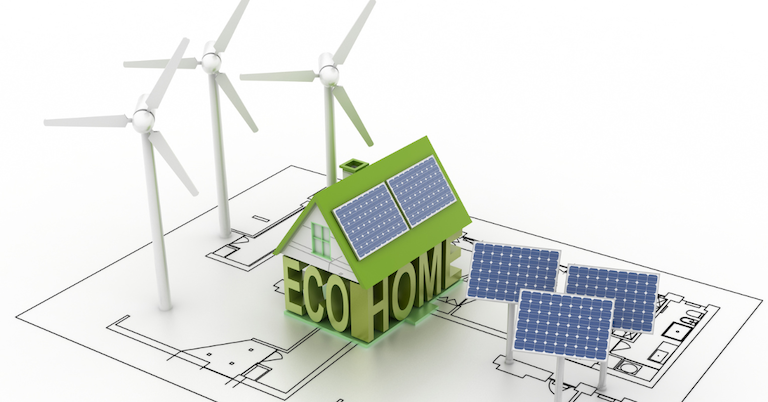
Eco homes tackle these issues by replacing fossil fuels with renewable energy. From solar panels, wind turbines, and recycling systems to biomass boilers, homeowners can generate cleaner energy while saving long-term costs.
Other features of eco homes include water conservation systems, sustainable flooring, VOC-free paints, and efficient waste management systems.
Benefits of an Eco Home
Eco homes come with numerous benefits to the people who live in them, others around them, and the environment in which people build them.
Here are some of these benefits:
Energy Efficiency
Eco homes help people save energy and use it efficiently and sustainably without significantly impacting the environment.
Improved Indoor Environmental Quality
Eco-friendly homes achieve improved environmental quality by purging the home’s internal environment of unwanted byproducts and emissions.
Because they use natural lighting and renewable energy instead of fossils, water purification systems, and ventilation systems, environmental media (air, soil, and water) are constantly filtered and raised to higher quality.
Low Maintenance
Materials used for eco homes are generally durable. As a result, they last longer, eliminate the need for constant maintenance, and increase the home’s lifespan.
Eco homes reduce carbon footprints when constructed with sustainable materials and while using renewable energy sources.
Water Efficiency
Eco homes are built and designed with appliances that help people use water resources effectively while managing and recycling the waste produced.
Healthier Life
Eco homes are toxin-free zones. Everything about their design, including building materials, is carefully made so there’s little to no effect on the health of humans.
Other benefits include higher property value, tax incentives, natural temperature regulation, waste reduction, and reduced strain on local resources.
Eco homes are a way of creating a sustainable future for coming generations. They are designed to meet environmental standards and reduce environmental damage as much as possible. This way, individuals and families can participate in the movement to create greener earth and save the planet.