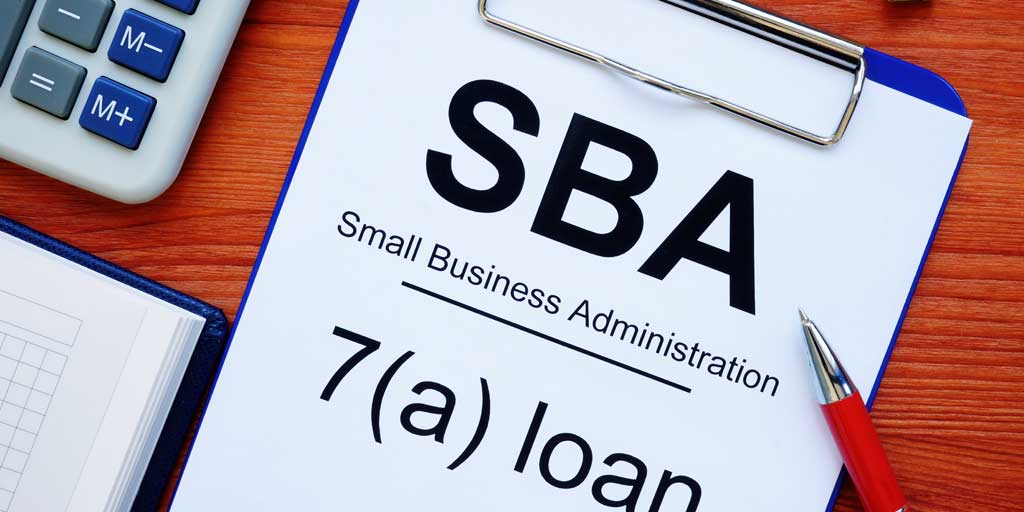
Hey entrepreneurs, good news from the SBA!
The Small Business Administration (SBA) has introduced some new rules that make it even easier for you to get your hands on a small business. These updates to the Standard Operating Procedures (SOPs) are a game-changer and here’s why.
First off, the maximum loan amount for a 7(a) Small loan has now been bumped up to $500,000. That’s a big leap from the previous cap of $350,000, giving you more financial room to play with!
But there’s more! They’re also making the lending criteria more flexible. When you’re applying for a loan, the SBA now wants to see your ability to repay the loan from your business’s cash flow rather than just your credit history. So, if you have a healthy business with good cash flow, you’re already ahead of the game!
And what about those equity requirements, right? Well, they’ve been given a fresh, entrepreneur-friendly coat of paint. If you’re buying out the entire ownership of a business, you now only need to inject equity of at least 10% of the total project costs, which can even include certain seller debts. If you’re expanding your existing business by acquiring a business in the same industry, in the same area, and with the same ownership structure, guess what? No minimum equity injection is required. That’s a huge plus!
So, in a nutshell, if you’ve got your sights set on owning a small business, these new rules are here to give you a leg-up. The SBA is making it easier than ever to turn your entrepreneurial dreams into reality. So why wait? Let’s get out there and make some magic happen!
The Small Business Administration (SBA) has announced its final rule on Affiliation and Lending Criteria for the SBA Business Loan Programs. The new rules, outlined in Standard Operating Procedure (SOP) 50 10 6, will apply to all applications received by the SBA starting from May 11, 2023.
Here’s what you need to know:
1. If your application was declined, or is yet to be decided upon, and could benefit from the new procedures, you can ask the appropriate SBA loan processing center for a reconsideration under the new procedures starting May 11, 2023.
2. The maximum loan amount for a 7(a) Small loan is now $500,000, up from the previous limit of $350,000.
3. For 7(a) Loans greater than $500,000, new underwriting standards apply. Your lender’s credit memorandum and analysis must address:
Your business: This includes its nature, length of time under current management, depth of management experience in the industry, and a brief description of the management team.
Financial analysis of repayment ability: This will be based on the three most recent years of financial information for existing businesses, or detailed projections for new businesses. The analysis must cover:
- Historical cash flow that demonstrates total debt service coverage after the SBA loan.
- Calculation of operating cash flow (OCF) defined as earnings before interest, taxes, depreciation, and amortization (EBITDA).
- Justification for additions and subtractions to cash flow such as unfunded capital expenditures, non-recurring income, expenses and distributions, distributions for S-Corp taxes, rent payments, owner’s draw, and global cash flow analysis that includes assessment of impact on cash flow to/from any affiliate business.
- The effect any affiliates may have on the ultimate repayment ability of the Applicant.
4. The debt service coverage ratio (OCF/DS) must be equal to or greater than 1.15 on a historical and/or projected cash flow basis, and 1:1 on a global basis. Debt service includes future principal and interest payments on all business debt, including new SBA loan proceeds.
5. For cash flow projections, your lender will need to justify revenue growth and any reduction in expenses. This should align with current industry trends.
6. Your lender will conduct a financial analysis, including ratio calculations, an analysis of working capital adequacy, an assessment of collateral adequacy, and insurance requirements.
7. In cases where 50% or more of the loan proceeds will be used for working capital, your lender must explain why this level of working capital is necessary and appropriate for your business.
8. There are also new equity requirements. The Lender’s requirement for equity and equity injection must be consistent with its requirements for similarly-sized, non-SBA guaranteed commercial loans. However, the Lender can reduce the amount of equity and/or equity injection required if it determines that the Applicant needs leverage that exceeds the Lender’s conventional requirements.
9. For changes in ownership, the new owner must inject equity of at least 10% of the total project costs. Seller debt may count towards this, under specific conditions.
10. When an existing business acquires a business in the same 6 digit NAICS code with identical ownership and in the same geographic area, SBA considers this a business expansion and will not require a minimum equity injection.
11. Loans to Employee Stock Ownership Plans (ESOPs) for the purpose of purchasing a controlling interest (at least 51 percent) in the employer small business are not subject to the SBA requirement for equity injection.
Remember, the full details of the new SBA SOP should be reviewed for complete understanding.