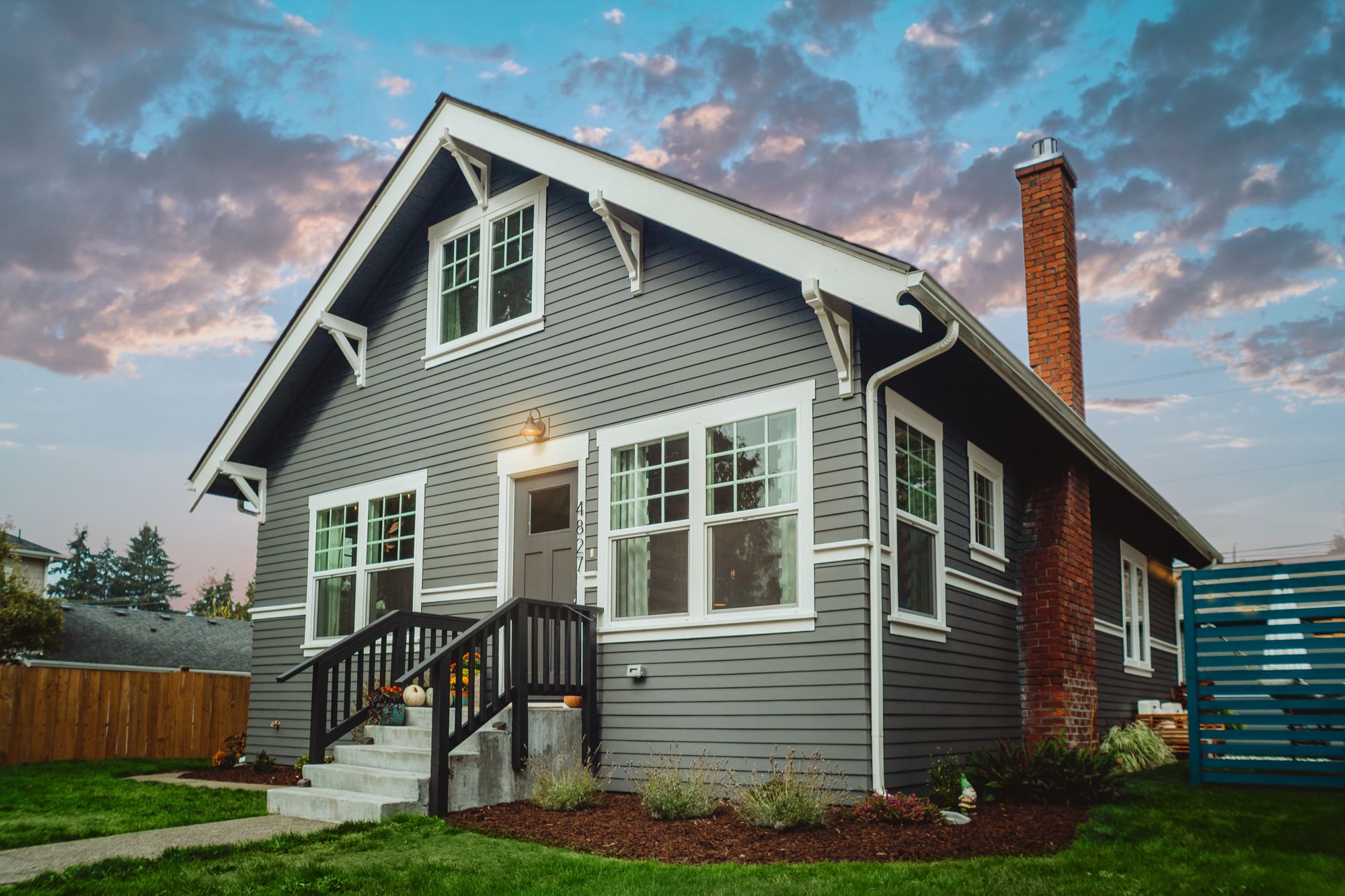
Buying a home can be overwhelming. For many of us, it can be one of the biggest financial decisions we’ll ever make. This makes the process potentially stressful, on top of the pressure to find the home of your dreams.
It can be challenging to balance what you like, need and want with what you can afford. It means taking into account different tastes, style, needs of a partner or children, and evaluating all the tradeoffs involved with choosing the best home for everyone.
To help you wrap your head around the homebuying process, we’ve simplified the entire journey to give you a better idea of what to expect when you buy. By following these 8 steps to buy a house, you should be able to navigate the homebuying process with more confidence, direction and clarity.
Step 1: Define The Dream House You’d Like To Buy
What does your dream home look like?
Before you get into the nitty-gritty of calculating your budget and applying for mortgage loans, start with the preliminary step of exploring your possibilities and considering your priorities. To help you narrow down the qualities you are looking for, we’ve put together a list of questions to ask yourself and your partner ( if you are buying a home as a couple).
Questions to Help Define Your New Dream Home:
- What does the concept of “home” mean to you? Is it a place for resting and relaxing? A place to hang out with friends and family? An escape from the demands of work? A place to enjoy your hobbies?
- What do you like to do in your spare time? Do you like to watch TV or read from a quiet nook? Do you enjoy cooking or entertaining? Will you tinker in the garage or plant a garden?
- What’s important to you about your home’s location? How will you get to work and what’s the commute like? Do you work from home and have special home office needs? If you have kids, is being in a top school district important for you? Or if your kids are in a private school, how close is the school and where do your kids’ friends live?
- What amenities would you want nearby? Would you like parks, playgrounds, trails or paths close to your home? How about golf, tennis, or a gym? Think about access to the grocery store, shopping and restaurants. How far are you willing to drive or walk to get to these places?
- What’s your home style? Do you want a home that’s a fixer-upper or one that’s move-in ready? Historic bungalow or new construction? Established or new development? City center or away from traffic? Traditional or modern?
- What home features are absolutely essential? What would be nice to have, but aren’t necessarily essential? And what features are deal breakers – things you definitely do NOT want your home to have?
Other Questions to Consider:
- Do you want a pool? A garage? Or a 3-car garage? What about extra storage?
- How many bedrooms and bathrooms do you want and need?
- Do you want a bigger home, where everything can have its own space? Or is that just more space to clean?
- Do you want a yard or do you want to avoid yard maintenance?
- Do you want a fence for your kids or the dog? Or a spacious backyard?
- Any special furniture or needs? I.e., does your spouse play the piano?
- Do you need a walk-in closet? Or his and hers closets? Separate vanities in the bath?
- Do you want a formal living room and dining space? A dedicated playroom for the kids?
- Do you like wood, tile or carpet flooring?
- What about light, dark or neutral tones?
Step 2: Come up with a preliminary budget
How much house can you afford? This is where you start to answer this question. In future steps, you’ll be making decisions on things like mortgage loans and down payments where you’ll be able to nail down a more specific budget. For now, you just need to get a general notion of what you can afford to spend every month. As a starting point, consider how much you’re currently spending on rent or housing.
As a general rule, lenders often recommend that you look for a home that costs no more than 3-5 times your annual household income. This assumes that you plan to make a 20% down payment and have a moderate amount of other debt.
If you don’t have a great credit score, you may have to budget more than 20% as a down-payment. This is also the time to look into whether you qualify for any special grants or programs for first-time home buyers, veterans or other groups.
There are so many different types of loan products available — adjustable vs. fixed rate mortgages, 30 vs 20 vs 15 year terms, etc. Do your preliminary research now and get down to the details in the next step when you speak to your mortgage broker to determine more exactly what kind of home you can afford.
Step 3: Speak To Your Mortgage Broker
Specifically, how much house can you afford? This is the time to refine your budget assumptions by firming up the details with a professional.
Your mortgage broker will help you take your monthly budget and translate that to a purchase price.
They’ll do this by taking into account factors like property taxes and home insurance as well as your own personal financial information, such as your income, debts, savings and investments. They’ll assess how different factors such as interest rates and the amount you put down can impact your purchasing power.
Once your information has been reviewed, you will get feedback on what kinds of mortgage loans are available to you, so you can better calculate a price range for the home you can afford.
Note: There is a difference between getting prequalified vs. preapproved for a loan. Prequalification is a preliminary step that is based on the information you provide your mortgage broker, without verification. This may or may not involve a credit check, depending on their policies.
Preapproval is a more involved process, which includes submitting paperwork to substantiate your financial situation. Whether you’re getting prequalified or preapproved at this stage, your credit is only good for 60-90 days.
In summary, the goal for this step is to talk to your mortgage broker, get an idea of the price range you can qualify for, and then get either preapproved or at least, prequalified.
Step 4: Refine Your Home Search
The next step is to start searching make a short list of potential homes. At this stage, you’ve assessed your priorities as a homeowner and have the information needed to come up with a budget for your home. Next, It’s important to consider both the upfront and long-term costs of home ownership.
- Upfront Costs can include: down payments, closing costs, appraisal fees, legal fees, and moving and home inspection costs.
- Ongoing Costs can include: mortgage payments, homeowner’s insurance, property taxes, association fees (if applicable), utility costs, and maintenance fees.
Use these short and long term factors to help establish a price range. Then, use this price range, along with other factors you’re considering, to refine your search.
Note: you may need to experiment with changing other factors such as the “number of bedrooms”, “square footage” or “location” to see what impact these changes will have on your search results.
Ultimately, the end result is a short list of specific homes that meet sufficient “Dream Home” criteria and fit in your budget range.
Step 5: Start Touring Homes
It’s time to schedule some house tours!
Until now, you might have attended open houses on your own, but now it’s time to start actively touring. To get started booking home tours, you can:
- Contact a real estate agent to coordinate schedules and book tours
- Book home tours online at SimpleShowing.com without having to contact an Agent first
With the first option, you will need to find an Agent and coordinate with his or her schedule to tour your shortlist of homes.
If you book tours online through SimpleShowing, you can book tours anytime on your schedule and a licensed agent will meet you at the desired location when it is convenient for you.
For either option, this will be the time where you will likely engage with a licensed real estate agent who can give you access to the properties and help you make an offer when you’ve found a home you love!
Some other benefits of working with an agent include:
- In-depth market knowledge
- Connections to a network of qualified professionals (Home Inspectors, Attorneys, etc)
- Experience with negotiations and writing offers
- Bonus SimpleShowing Benefit: By working with a SimpleShowing Agent, you get all the benefits of working with a traditional agent, with the added bonus of receiving a Buyer’s Refund check at closing of $5,000 on average.
In preparation for attending the home showings, you may want to pull out the answers to the questions from step 1. This way you can see how each home measures up to the characteristics you initially defined. You might also want to keep a record of all the homes you’ve visited and things you love about them as well. This will be increasingly helpful as you visit more homes because they may start to run together and you might now remember which homes had which characteristics.
Another pro-tip: take a tape measure, camera and writing utensil. Measure and take notes, photos and even videos of key parts of the house to capture all of the priority information about each home you visited. You’ll be glad you did this when it’s time to finally make a decision on your favorite house.
Step 6: Make An Offer
You’ve made a decision on the best home, given your needs, preferences and budget. Now, the time has come to make an offer! This is where your agent becomes especially handy in helping you figure out all the different elements that go into your offer including:
- Offer Price
- Expiration Date of Offer
- Good Faith Deposit (1%)
- Inclusions to the sale (i.e. Appliances, furniture)
- Financial terms
- Inspection Period
- Closing Date
- Other terms and contingencies
- Optional: Personal Letter to the Seller
Other Factors to Consider When Making an Offer:
Keep in mind that there are a variety of elements that can impact the strength of your offer. For the seller, it may not be all about who offers the highest price.
Factors that can impact the competitiveness of your offer include:
- Whether you are paying cash
- How long before you are able to close
- Length of the inspection period
- Higher good faith deposit
- Contingencies, such as financing or the need to sell your current home first
For example, if a seller needs to close on a home in 30 days and a buyer makes an offer stipulating that they can close in 21 days, then that makes their offer more competitive.
Your agent will help you figure this out, so you can understand the pros and cons of different decisions you can make when writing your offer.
Your agent acts between you and the seller to feel out what’s most acceptable to the seller, what’s important to them and most importantly — what’s important to you.
Note: While most contracts are fairly straightforward, remember that real estate agents are not attorneys and cannot give legal advice. If you have specific questions or special circumstances, consider consulting an attorney. Ask your agent for a referral to an attorney who specializes in real estate transactions if needed.
Step 7: Get Ready for Closing
You’ve made your offer and it’s been accepted by the seller. Finally, it’s time to get ready for closing. There are two parts of this step: things you need to do and things that are going to get done on your behalf.
Things you need to do:
- Make your good faith deposit: your contract will specify when this payment needs to be issued.
- Schedule a home inspection: your agent can recommend a good home inspector. Your agent can also help you revisit the offer if needed, based on the results of the inspection.
- Complete your mortgage application: submit all of the financial documents required to your mortgage broker. Talk with them about the possibility or pros and cons of locking your mortgage rate.
- Talk to your insurance provider about homeowner’s insurance.
Things done on your behalf:
- Your mortgage broker will order an appraisal.
- Your closing attorney/agent will order a title search and put together your title insurance policy. They will also help coordinate all of the necessary paperwork and documentation before closing.
Step 8: Close the Sale
Once you’ve completed all the paperwork and gone through the steps above, it’s closing time! It usually takes about 35-45 days to go through this process, after which you can move in on the day you close.
The closing itself typically takes place at an attorney’s office or closing agent’s office, where you’ll sign all the paperwork and finally pick up the keys to your new home.
This will also be when you receive your $5,000 average refund check if you purchase your home with a SimpleShowing Agent.
Conclusion
The journey of buying a house can be an exciting yet daunting process, but with the right guidance, you can confidently navigate the real estate market. By understanding your monthly mortgage payments, assessing your debt-to-income ratio, and finding the best mortgage lender for your needs, you’ll be well-equipped to manage your monthly payment and secure a favorable interest rate. Whether you’re considering a conventional loan or a Federal Housing Administration (FHA) loan, it’s essential to review your credit report from the major credit reporting agencies and establish a budget that factors in loan payments, mortgage rates, and homeowners’ insurance.
Throughout the home buying process, be sure to work closely with your seller’s agent to negotiate the best deal and ensure a smooth transaction. By determining the minimum down payment required for your preferred home loan, you can avoid any surprises and better position yourself in the competitive real estate market.
With careful planning, a clear understanding of your gross monthly income, and a comprehensive knowledge of the different mortgage payment options available, you’ll be well on your way to securing your dream home and enjoying the satisfaction of homeownership. The right strategy and mindset will make all the difference as you embark on this significant life milestone.